If you’re in debt and worried about your assets, you may be asking yourself – can creditors take my car? Learn what creditors can and can’t do with your vehicle and other assets below.
What is a Creditor?
A creditor is a person or organisation that is owed money because they have provided a service/good or loaned money to someone, e.g. a local council, utility company or a Buy Now Pay Later (BNPL) provider.
Can Creditors Take My Car to Repay My Debt?
Creditors themselves cannot take your car to repay an unsecured debt. However, if legal enforcement has been taken, they can instruct bailiffs or enforcement agents to recover what they are owed. These bailiffs/enforcement agents must follow strict legal procedures and can only repossess a car if it is not exempt from specific criteria.
For example, in England and Wales, bailiffs cannot clamp or remove your vehicle from your property if:
- The vehicle is displaying a valid Blue Badge or is a Motability vehicle.
- It is clearly used by a disabled person.
- You need it for your job (e.g. you are a taxi driver) and it’s worth less than £1,350.
- The vehicle is subject to a finance agreement, such as a hire purchase or a ‘logbook loan’ where you are not yet the legal owner.
- It’s also your home, e.g. a campervan, caravan or houseboat.
Debt collectors are not the same as bailiffs and therefore do not have the right to clamp or take your vehicle.
What If I Bought My Car Using Hire Purchase?
If you bought a car using hire purchase, a Personal Contract Plan (PCP) or through a conditional sale, the vehicle is still owned by the company you made the finance agreement with. This means bailiffs usually don’t have the right to take it, but the law is complicated, so some bailiffs might tell you they can.
Before considering taking your vehicle, the enforcement agent should look your car up on the HPI (Hire Purchase Investigation) check website. This will prove you’re still paying for it on hire purchase or lease hire.
If the bailiff insists on taking the car, make an official complaint (in writing) to the bailiff company and seek debt advice. You should also send a copy to the appropriate regulator (e.g. this might be the Financial Ombudsman or the Local Government Ombudsman).
What Happens If Bailiffs Clamp or Take My Car?
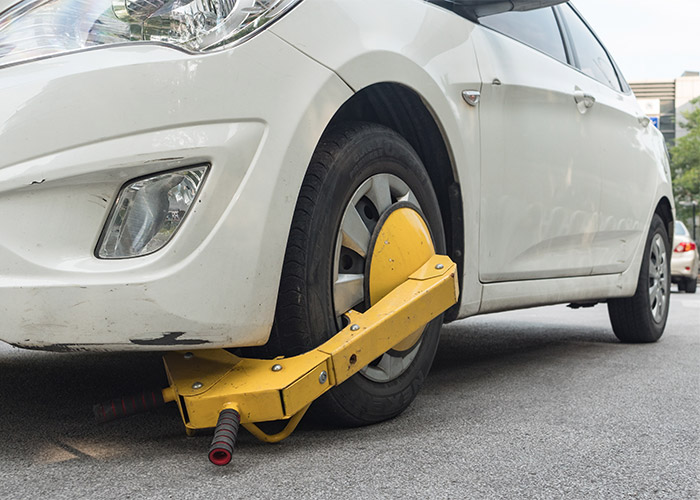
If Bailiffs Clamp Your Car:
It’s crucial to act quickly. Bailiffs can come back and take your car after a minimum of 2 hours if you don’t make arrangements to pay. Don’t remove the clamp or move your vehicle – this is illegal.
Bailiffs must give you extra time to deal with your debt, or get debt advice before taking your vehicle, if they class you as ‘vulnerable’.
You could be classed as ‘vulnerable’ if you:
- Are disabled or seriously ill
- Have mental health problems
- Have children or are pregnant
- Are aged under 18 or over 65
- Don’t speak or read English well
- Are in a stressful situation like recent bereavement or unemployment
If you don’t think they should have clamped your car or they haven’t followed the correct procedure (e.g. leaving a ‘warning of immobilisation’ on the vehicle), you can complain to the bailiff company, or the appropriate regulator or ombudsman.
After you’ve paid the debt or made a controlled goods agreement, the bailiffs will remove the clamp.
What is a warning of immobilisation?
A warning of immobilisation shows when the bailiff clamped the vehicle (i.e. the date and time) and a phone number you can call to arrange payment.
If Bailiffs Remove Your Car:
If you haven’t set up a repayment plan or signed a controlled goods agreement, bailiffs can remove the vehicle and sell it to pay off your debt but they will need to give you a receipt (the bailiff must sign this and it must show the model and colour of the vehicle).
If you act quickly, there could still be time to stop a sale – check how to get your belongings back before they’re sold.
Important: You’ll normally have fees added to your overall debt when a bailiff visits and clamps or removes your car – learn more about bailiff’s fees.
How Do I Prevent Creditors Taking My Car?
While you are taking steps to sort out the debt, we would recommend moving your vehicle somewhere safe. For example, a locked garage or a friend/family member’s driveway (with their permission).
If you can’t afford to repay the debt, the best option is to contact your creditor and ask them to set up a repayment plan. But keep in mind that they don’t have to agree to one.
Another option is asking the bailiff to set up a repayment plan. If you have previously (and peacefully) let the bailiff into your property, they may have set up a controlled goods agreement without a repayment plan in place. That’s why we recommend you don’t let them in or feel pressured to sign the agreement.
What is a controlled goods agreement?
A controlled goods agreement is a list (referred to as an ‘inventory’) of things a bailiff can take if you do not pay your debt. Once items are added to the list, the bailiff has ‘taken them into control’.
If you enter into a controlled goods agreement, it’s very important that you:
- Ask the bailiffs to write the model, make and colour of anything they put on the list.
- Tell them to cross off anything they are not allowed to take (e.g. items essential for living such as your fridge, cooker, washing machine, etc.) or you don’t own (you will need to prove it’s not yours).
- Contact us for budgeting advice to help you work out how much (in instalments) you can realistically afford to pay towards the repayment plan. Do not let the bailiff push you into agreeing to repayments you cannot afford. If they do, complain to the Enforcement Conduct Board.
- Make sure the agreement shows the correct details, e.g. your name, address, amount of debt you owe, the repayments you have agreed to, how often you’ll make these repayments and the list of goods the bailiff has ‘taken control of’.
- Double-check any fees the bailiff has added – check what fees bailiffs charge.
Other Options That Could Help:
If you’re struggling to make a repayment plan with your creditor(s) or bailiff/enforcement agent, please don’t hesitate to reach out to us.
We can advise on debt solutions that might be able to help you get your finances back on track, such as:
- Debt Management Plan (DMP): An informal, flexible solution that involves working out a budget and paying realistic, affordable amounts towards your debt each month.
- Individual Voluntary Arrangement (IVA): A legally binding agreement between you and your unsecured creditors, arranged and supervised by an Insolvency Practitioner (IP). An IVA allows you to “freeze” your debt and repay it over a set period of time (usually 5-6 years) – after this period, any money you owe is written off.
- Debt Relief Order (DRO): A type of insolvency that is free to apply for through an Approved Intermediary. This is only available for individuals:
- Who have very little disposable income (£75 or less) leftover each month after paying essential living costs.
- Who owe less than £50,000.
- Whose car is worth under £4,000 (or £2,000 in Northern Ireland).
- Whose other assets are worth less than £2,000.
- Bankruptcy: A formal insolvency procedure for those who have debt that exceeds their assets or who cannot make their repayments when they’re due. There is no restriction on the level of debt you must have to apply. You can apply online through the central government website.
Use our free*, online debt advice tool today (it only takes 10-15 minutes!) to check which solutions you might qualify for.
Need Support Dealing with Creditor Contact?
To get free*, confidential debt advice, and support dealing with creditor contact, contact our professional debt advisors at Angel Advance today.
There are a few ways you can contact us:
- Free* Online Debt Advice Tool: https://getdebtadvice.angeladvance.co.uk/GetStarted
- Phone: 01925 599 400
- Freephone: 0800 210 0638
- Email: info@angeladvance.co.uk
- WhatsApp: +44 192 559 9400
- Webchat: https://www.angeladvance.co.uk/
*Our advice is free, but if you sign up for a debt solution with us, fees will apply.
Can a Creditor Take My Car: FAQs
Technically, bailiffs (also known as enforcement agents) don’t have to show ID before clamping or removing a vehicle, but they should on request. In other words, they should show you ID and a copy of the warrant/writ of control if you ask them to see proof of their identity/authority.
That’s why we would always recommend asking to see their ID and proof they have authority before they take any action.
Yes, because the debt is in both of your names, bailiffs would be able to take the car in this situation – even if the V5C logbook is solely registered to you and not your partner.
Some vehicles are protected and cannot normally be taken, for example vehicles that do not belong to you because it has been provided to you through the motability scheme or a vehicle subject to hire purchase or conditional sale agreements.
Yes, if your car has been sold by a bailiff but the amount raised isn’t enough to repay your debt and enforcement costs, you still owe the remaining balance to the creditor.