
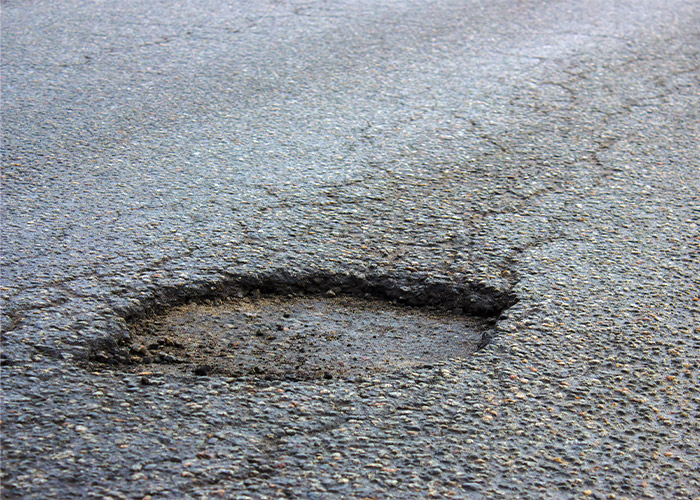
Pothole Damage at a Glance: Key Statistics
According to the road safety charity, IAM RoadSmart, between 2024 and 2025:
- A fifth (22%) of UK drivers needed vehicle repairs at least once a year due to pothole damage, often discovered during routine servicing or MOT checks.
- Three quarters (74%) admitted to braking sharply to avoid potholes.
- Almost all drivers swerved at the last minute to avoid a pothole.
- 5% of drivers spent more than £1,000 on repairs to damaged tyres, suspension and steering due to poor road conditions.
Does This Sound Like You?
If potholes are affecting the safety of your driving, or the cost of repairs is giving you money worries, you’re not alone. And the good news is, there’s something you can do about it.
Under the right circumstances, you can make a pothole damage claim to your local council, which may be able to reimburse you for repair costs. But, obviously, you can only claim if your council was actually at fault, and there must be enough evidence of this. We’ve put together a full guide to pothole damage claims and compensation to help you below.
How Do I Know If Pothole Damage Was My Council’s Fault?
Potholes can be unpreventable, especially during the winter months. So the question you must ask yourself before making a claim is, could (and should) this pothole have been fixed by the council before my car hit it?
Pothole claims can put councils under pressure, so you’ll need to gather enough evidence to make compensation a more likely result. Things you may be asked for include:
- The depth of the pothole: To be classed as a pothole, it needs to be at least 4cm deep. If it’s safe to do so, measure the depth and width of the pothole and write it down.
- Whether the damage was actually caused by the pothole: You’ll need proof that the damage to your car is from the pothole. The easiest way to do this is to ask your mechanic to put that in writing for you. If the damage is from a different problem, but the pothole made it worse, you’ll still be able to claim, but you won’t get the full repair costs back.
- Photographic evidence: If it’s safe to do so, take some pictures of the pothole. A close-up photo with a measuring tape inside it would work well to show the depth. Some photos from further away are useful too, to show the pothole’s position in the road. Finally, a photo of the damage to your car is crucial.
- Notes from the date of the damage: As soon as you can, we would recommend writing down the time and date the damage happened, and making notes about: the pothole’s exact position on the road, which lane it’s in (if applicable) and how many metres it is from the pavement. It may also be helpful to jot down any prominent buildings nearby (e.g. churches or schools) to help your council pinpoint the exact spot.
- Evidence from your mechanic: When you get your car repaired, keep a copy of your bill and make sure it’s clearly itemised and dated.
How to Make a Pothole Compensation Claim
The quickest way to make a pothole compensation claim is via a ‘fast claim’. But first, you need to find out which authority is responsible for the pothole damage and report it to them. When you contact them, ask if a claims form can be sent to you or downloaded online.
Who do I make the claim to?
- Local roads, small A roads & B roads in England, Scotland and Wales: Call your local council or report the pothole online. (For Scotland – https://www.mygov.scot/report-pothole/)
- Motorways & major A roads in England: Call National Highways or report it online.
- Roads listed as ‘red routes’ in London: Call Transport for London or report it on their website.
- Motorways & A roads in Scotland: Call Traffic Scotland or report it on their website.
- All road types in Northern Ireland: Call NIdirect or report it on their website.
Once you’ve done this, you can file a ‘fast claim’ with the relevant organisation. Here’s how:
- Councils in England, Scotland or Wales: When you first report the pothole, some councils will send you a form to complete. But if they don’t, this may mean your council doesn’t accept ‘fast claims’ (you can check this on their website). In this case, you would need to make a full claim. We would recommend contacting your local council for support with this.
- Transport for London: TfL will usually send you a form after you report the pothole. If it doesn’t arrive for a while, call 0343 222 1234. It’s important you tell them whether you were driving a car or cycling when you hit the pothole, as there are separate forms for drivers and cyclists. Once you’ve sent your form off, your claim will be investigated, but there is no official timeframe for you to get a response.
- National Highways: Similarly, you should be sent a form when you report the pothole. If you haven’t, you should call 0300 123 5000. After you send it off, the agency will confirm they have received it within 21 days, and they have 90 days to respond.
- Major roads in Scotland: Again, you should’ve been sent a form to fill out after you reported the pothole to Amey or Bear Scotland (the two agencies that look after motorways and A roads in Scotland), who you can contact if you haven’t received this. Amey usually responds within 28 days, but Bear Scotland gives no set timeline.
- Traffic Wales: If you asked for a form when reporting the pothole, it should have been sent to you shortly afterwards. If you didn’t ask or it hasn’t arrived, call 0300 123 1213.
- Dfl Roads: You can claim directly or download a claim form online. The average time it takes for a decision to be made is around 4 months, but you can track your claim online too.
Are You Facing Other Money Worries?
If the rising cost of living is causing you a daily struggle, contact Angel Advance today to get free*, confidential debt advice over the phone, via email, through WhatsApp, or in a webchat.
You can also try our free online debt advice tool, which is available any time, day or night. Just fill out your details and it will make a monthly budget for you, give you specific debt advice based on your situation, and show you which debt solutions you may qualify for – all in just 10-15 minutes.
*Our advice is free, but if you sign up for a debt solution, a fee will apply for some solutions.